
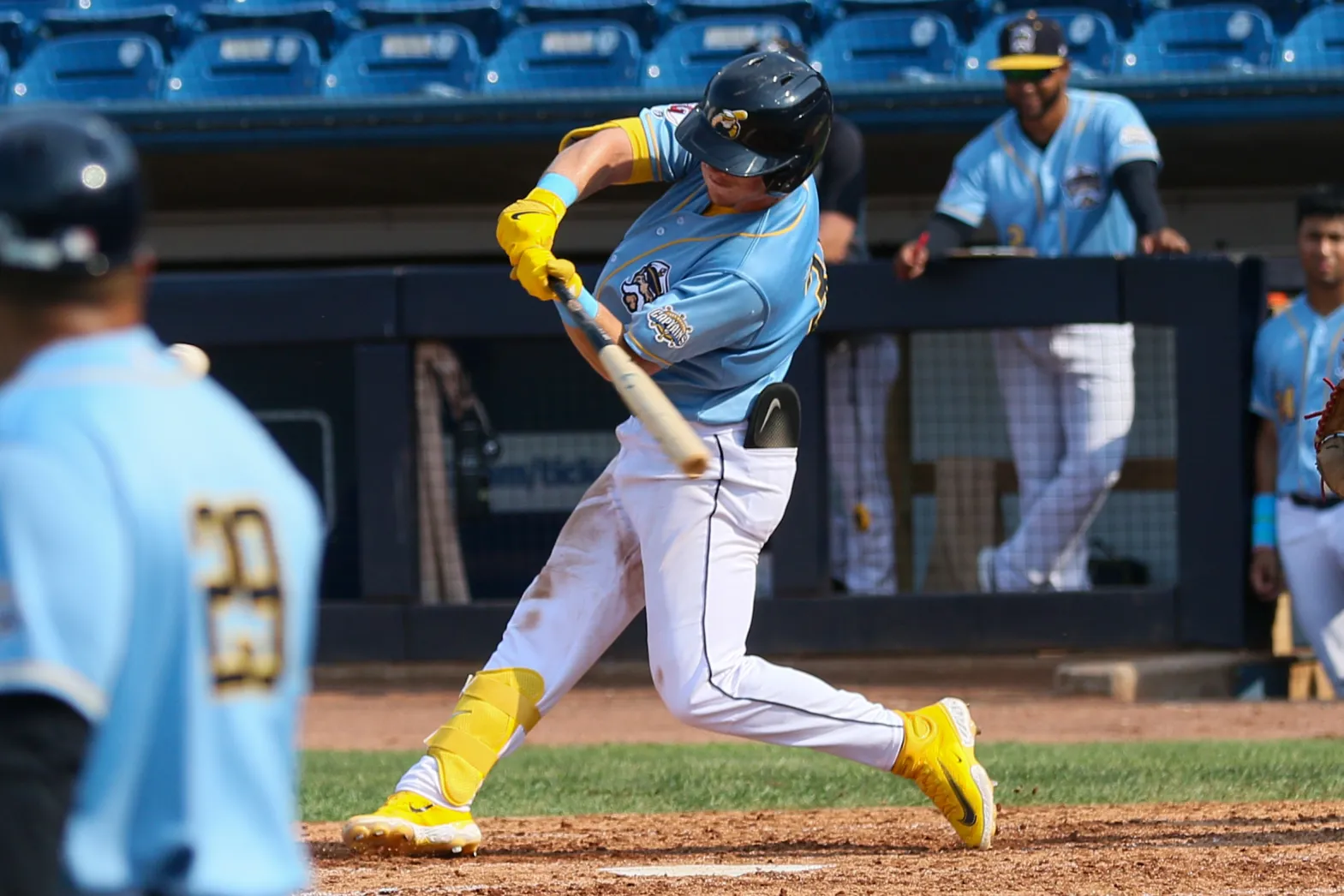
We fans love to compare baseball players of today to those of our or our parents/grandparents time. Cleveland fans have been doing this for as long as I remember. But the other day, something hit me when I was watching Travis Bazzana lace a double to increase the Guardians lead over the Yankees: Travis looks like Mickey Mantle!
Mickey Mantle
Quick history of Mickey for those too young to know. Mantle was a star outfielder for the New York Yankees. A switch hitter, Mick (his nickname) played his entire career for the Bronx Bombers. His lifetime average is .298, with 2,415 hits, 536 home runs and 1,509 RBIS. He won seven World Series titles (while playing in 12 of them), and still holds many of the offensive World Series records like HRS (18), runs (42), walks (43) and still holds the highest on-base AND slugging percentages.
He was an incredible mix of speed and power in his 5’9”, 195 pound frame. How is this, you might ask? That’s what we are trying to present here.
Swing thoughts in the 50’s and 60’s
In the 50’s and 60’s analytics was yet to surface. There was no launch angle or exit velocity readings (velo), only average. There were different approaches to the swing. Line drives were encouraged, hands were lower, close to the waist, and the bat was vertical or “tipped” slightly. Bat speed and generating it had different approaches. Swing up or swing level or swing downward? It was a sport that showed different players had different success with their swings. Same holds true today.
Some would say your lead foot (the one leading to the pitcher) and toes should “squash a bug” resulting in a hip turn. But when it came to The Commerce Comet (other Mantle nickname), his swing has elements that young hitters should emulate. Keep two very important things in mind: Mantle had a major shoulder injury late in the 1950’s that hampered his left-side swing. And though his right-handed hitting numbers were gaudier (.329 versus .289), most pitchers were righty which is why Mick had more at bats as a lefty. And his power numbers reflect that (372 dingers from the left and 164 from the right).
The Mick’s swing
Mantle did a slide with his stride foot (see leading foot). His hands would be about at his waist level and the bat was pointing to the sky. His back, left foot would be close to the back white line in the batter’s box, with his right foot about shoulder width apart.

Joey Myers at Hitting Performance Lab has a great take on both Mantle’s left AND right swings. Mantle’s stride is a long one, starting when the pitcher is basically at the top of his release. But Myers mentions the Mick’s weight transfer AND foot pressure. His strong turn of shoulders and hips is driven by the legs and his trailing knee will basically be at a 90 degree angle. He keeps his weight on the inside of his trailing foot, allowing his body to coil and unleash tremendous power. His leading foot’s weight is on the outer portion of his foot acting like an anchor to keep his body and arms on the plane he likes.
Travis Bazzana
For those who don’t know the kid from Australia, Travis was the #1 pick in the 2024 MLB draft. His rise through the minors was fast. A fiery second sacker, Guardian fans see similarities to him and Grady Sizemore. But Mantle is a much better comparison. Let’s dive in.
Here’s a great TikTok video on Travis’ swing.
@lawsonaaronllb Here’s a good slow-mo look at Travis Bazzana. He’s got a pure swing with tons of pop. What sticks out to you? Send this to a friend who needs it Save it for when you need it Follow or DM me if you need a hitting coach #baseballtips #hittingdrills #batspeed #baseballswing #fyp
Bazzana has his hands higher like many hitters today. His lower body and legs, though, are almost carbon copies of Mantle’s at the start.
Notice the higher hands. Now Travis will not SLIDE his lead foot but pick it up and stride to the pitcher. His weight starts on the back foot but as he steps forward, like Mantle, his left knee is pointing at the pitcher, hips open and his lead foot sees the weight transition to the outside. His head stays on plane, never moving up or down. Focused. But this allows his body to uncoil around his spine and hips.
Travis’ Swing
Mark DeRosa does a nice job of discussing this.
Though the bat starts vertically, notice how the bat end goes forward as Bazzana begins to coil his left side, that weight on his inside right foot. Mickey and many good hitters in the 1950’s did the same. Ted Williams is a classic example. They were trying to create momentum. Some did it with the movement of the bat forward, knowing they would whip it through soon. In today’s terms, it’s similar to a golfer’s backswing where the shoulders wind the club back generating the energy that will be released with the help of the hips and legs.
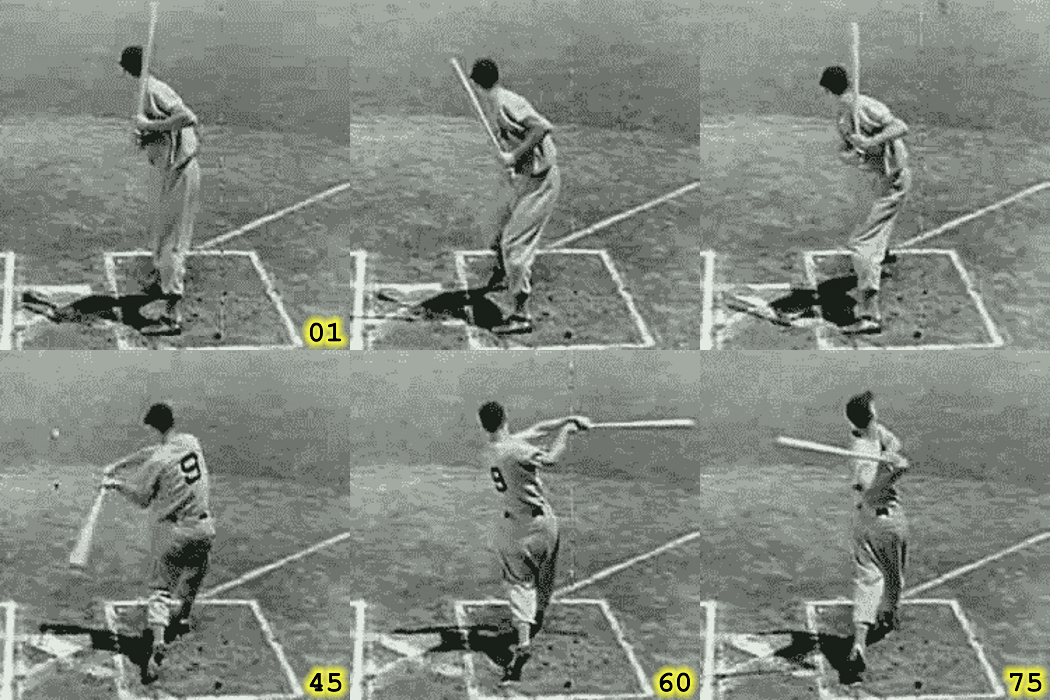
Ted Williams
Travis stays in his crouch longer than Mickey. But that could be because of Mantle’s long knee and shoulder issues.
View this post on Instagram

Make no doubt. They both have eerily similar swings from great fundamentals.
I am in NO WAY comparing the playing styles or predicting that Travis will someday be like Mantle. I am only showing how similar their swings are.
But, if Travis continues to show a drive to improve and a desire to be the best second baseman in MLB, the Guardians will reap a huge reward by making him the number 1 pick in the 2024 draft.
Featured Image courtesy of Brian Booher, The News Herald


1 Comment
Leave a Reply
Leave a Reply





Pingback: Travis Bazzana’s career night shows why Guardians rookie is becoming must-see baseball