
Intro
The World Cup has stirred so many emotions for so many fans from the US to Argentina to Norway. But one thing that has occurred is something that we as fans find the most frustrating event in any sport: REPLAY.
VAR
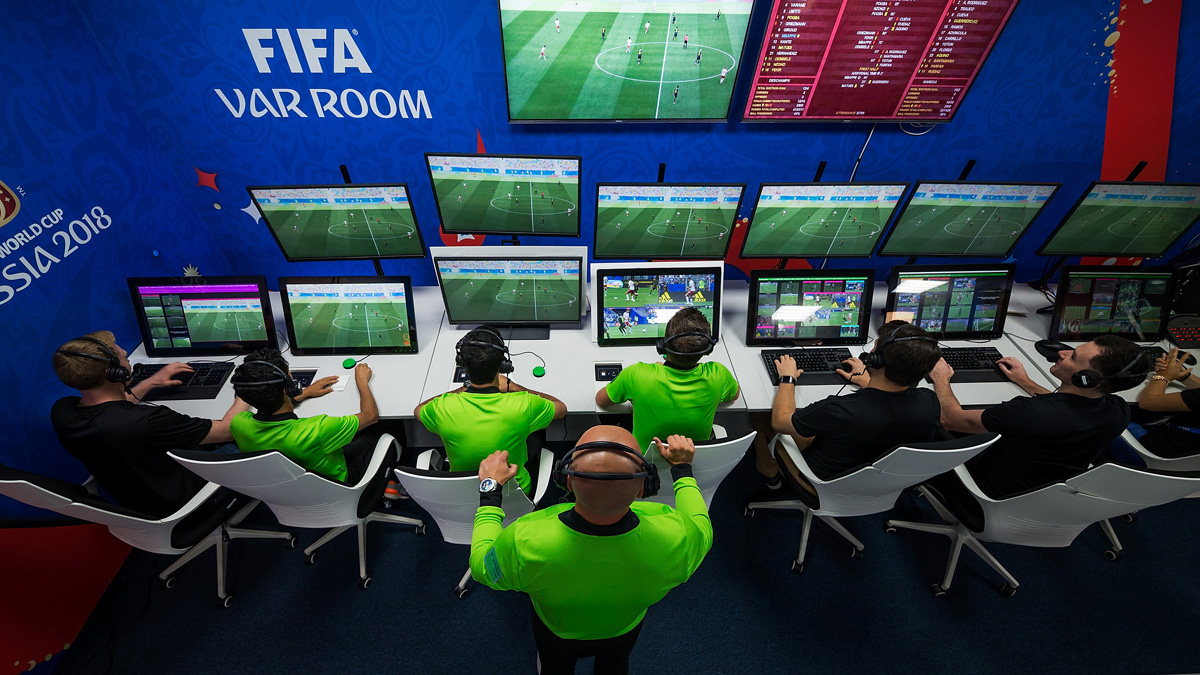
Flo Balogun, the US forward, was assessed a red card on a tackle in a game versus Bosnia when Video Assistant Referee (VAR) was used to check on the tackle that struck the back calf of the defender. Though the FIFA rules do not allow the use of VAR in this instance, it was the main reason for Balogun’s suspension. There have been numerous issues where VAR was or was NOT used this World Cup, causing confusion and frustration.
But not just soccer do we find controversy. This year’s French Open Tennis tournament saw the replay NOT utilized for a call that impacted the second set in a match between Casper Ruud and Joao Fonseca. Fonseca’s forehand sailed long, giving the second key set to Ruud. But the tennis replay, Hawk-Eye, is not utilized at the French Open, the only major tennis tournament that relies on human calls. The chair umpire called the shot good and Fonseca went on to win the match. Television replays with Hawk-Eye clearly showed the ball out.
What is the answer?
So where do we stand as fans of sports? Baseball has tried with the ABS (Automated Ball-Strike System) to keep umpires consistent. The NFL and College Football have tried to assist the referees in this climate of bigger, stronger and faster athletes with calls too. Even those plays where a helmet-to-helmet hit has occurred. Want to anger Browns fans? Bring up the Browns/Chiefs playoff game when replay was NOT used for a clear helmet-to-helmet hit on Rashard Higgins resulting in a touchback for the Chiefs.
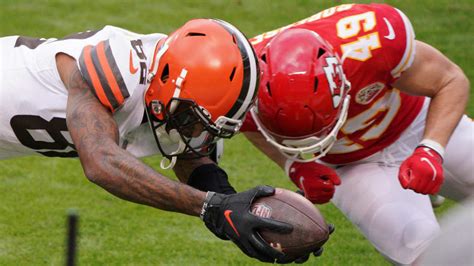
Courtesy of Denny Medley-USA TODAY Sports
But what do we, as fans of our sports, want? How should replay be instigated? What are we expecting replay to solve?
Short history
The origins of instant replay (IR) stem from of all places: Army versus Navy in 1963. Tony Verna, sports director for CBS, introduced the world to action that is replayed to highlight a special moment. Army QB Rollie Stichweh punched in the ball from the one yard line for a touchdown in the fourth quarter. Navy, ranked #2 at the time, still managed to win the ballgame, 21-15. But the videotape machine, weighing at roughly a bit more than half a ton, showed the run at full speed. Lindsey Nelson, the TV commentator, quickly noted: “Ladies and gentlemen, Army did NOT score again!”
https://www.youtube.com/watch?v=TZ4rZCoMmC0
Go to 47:11 to see the play in question.
Technology
As cameras and the equipment improved, slow-motion replay became a staple in television productions. Increased camera angles and the technical equipment becoming more portable and sophisticated replay technology constantly improved. The NFL in 1986 went all in for replay, but it wasn’t smooth. Glitches and delays caused the NFL to stop the practice in 1991.
Other Leagues History
FIFA
We might as well start off with VAR, since that’s been generating all the fuss recently. VAR was first imagined by the Royal Netherlands Football Association. It was tried at different levels in varying countries. Even a United Soccer League match here in the US saw VAR utilized by the match head ref.
But FIFA, under Seth Blatter, refused ANY use of technology on the games. When corruption charges ended Blatter’s reign, current FIFA boss, Gianni Infantino, saw a slow introduction to the game.
First instituted in the 2018 World Cup, VAR adjudicated 335 plays, 14 of those plays were then overturned. FIFA said the success rate was 99.8%.
MLB
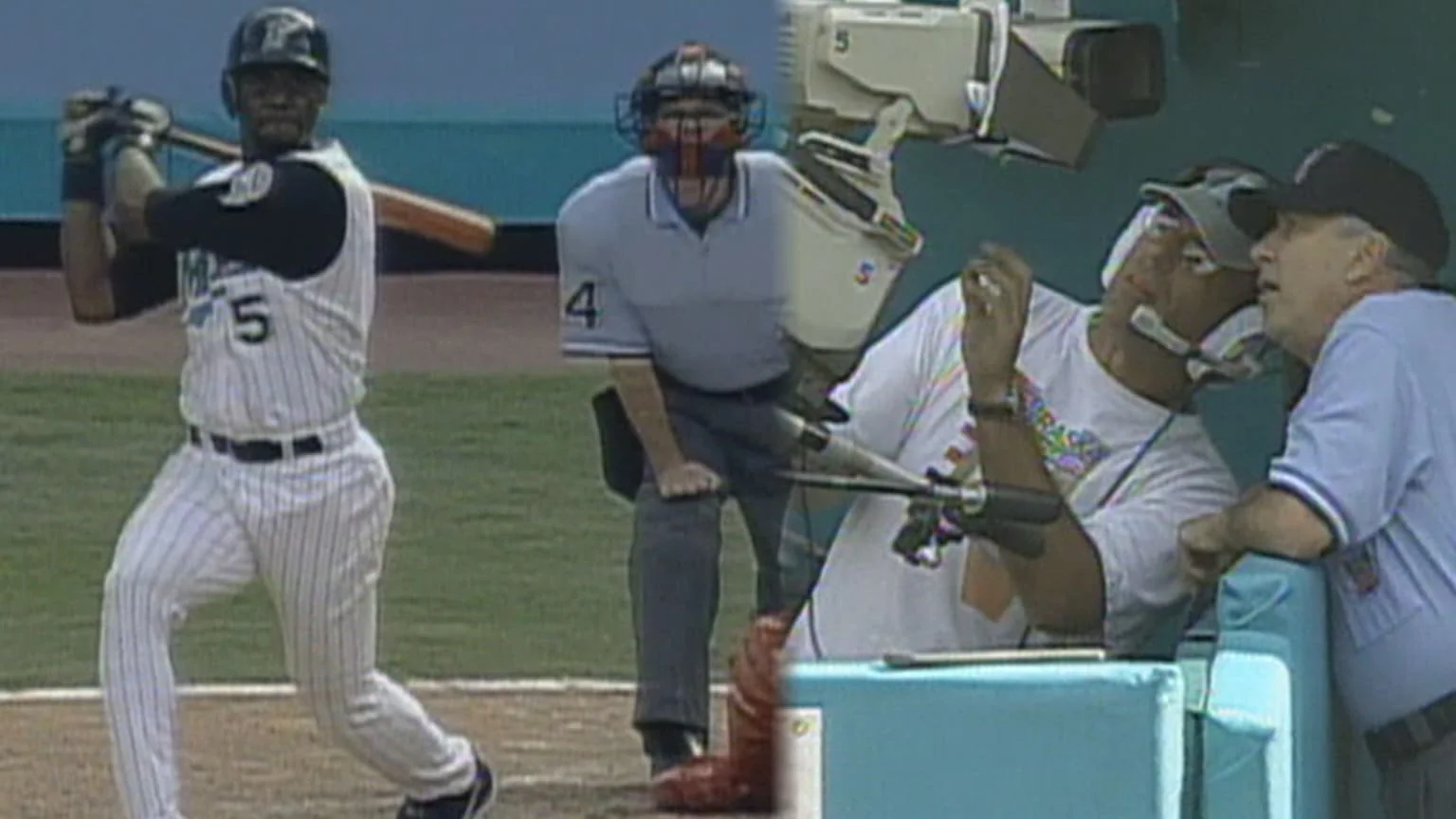
Image taken from REDDIT.
MLB was one of the last sports to implement instant replay. In 2008 only the umpiring crew could initiate a review with limited instances. The current system was rolled out in 2014. But in 1999 a game between Florida and St Louis, Cliff Floyd of the Marlins hit what looked like a 3 run homerun. The field at Pro Player Stadium had scoreboards that were in play, and NL ump Frank Pulli used a tv camera to watch the replay as the ball hit squarely on the scoreboard for a double. Both the NL and AL offices agreed that the ump should not have used the replay for his decision.
NBA
The NBA first started replay after the 2002 debacles. The worst being the Lakers/Kings game 6 of the 2002 NBA playoffs. And just the Western Conference Finals in general. Watch this video.
One could argue this set of calls wasn’t as egregious as the shot that should not have counted. Samari Walker of the Lakers let fly a three point attempt at the end of the half but was clearly released after the clock made zero. The refs counted it. Think they wanted Kobe to get his ring?
Immediately after the playoffs, the NBA instituted replay.
NHL
Hockey has seen instant replay since 1991 and only for disputed goals. But true hockey fans will insist that replay was first instigated in 1955, airing a goal thirty seconds after the fact during a break in action.
What fans want
If we ask fans what they expect from instant replay, it’s probably the following in some order, obviously based on the sport.
- “Getting it right!”
- Fairness.
- Transparency for fans and players.
- Evaluation of referees and umpires.
I would suggest that key scoring moments, time issues, fouls, boundary calls and player abuse be all reviewable.
What must be balanced
But it’s also important to make sure of the flow of games. So, IR should also try to minimize the following in no order.
- Lengthy disruptions.
- Subjectivity in interpretations. (What the heck IS a catch in football anymore?)
- Momentum changes.
- Level of technology and its cost.
- Who makes the calls? In a booth or on the field/pitch?
Where do we go
The leagues are the ultimate determining factor in what happens next. Fans and players/coaches can complain, argue and push for changes. But the owners and commissioners and in the case of the World Cup or other nation competitions the governing bodies of that sport need to see this as a key issue for fairness, consistency, and ultimately a great product.
I do believe that a big part of the frustration on the fans’ part stems from the betting influence and how much leagues are benefitting from sites like FanDuel, DraftKings, bet365, Kalshi and their ilk. The impact of betting and predicting has certainly raised the volume of the anger and frustration.

Conclusion
So where do you stand in this take? What sports are using IR correctly? Which ones incorrectly? What would you like to see implemented to fix the system? Or, is the system broken beyond small repairs? Share with us your ideas.










Recent Comments