
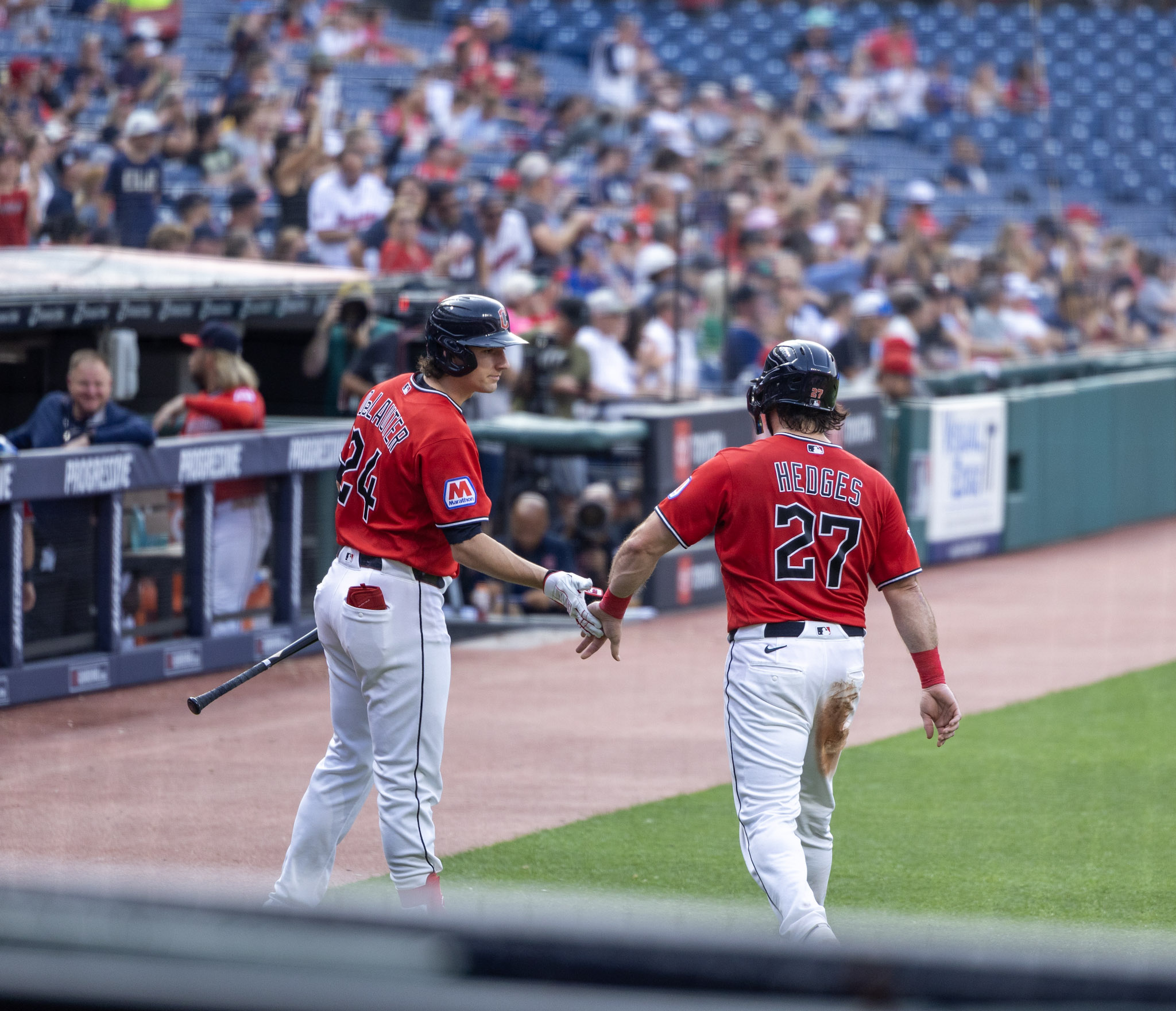
Through July 28, Cleveland’s postseason hopes remain alive but the offense is giving the pitching staff almost no margin for error.
For most of 2026, the Cleveland Guardians have looked like a team trying to win games with one arm tied behind its back. The pitching has kept them relevant, the bullpen has saved tight leads, and the defense has done enough to keep games close. But the offense has been so quiet recently that every inning feels like a countdown to see whether Cleveland can scratch across even one run.
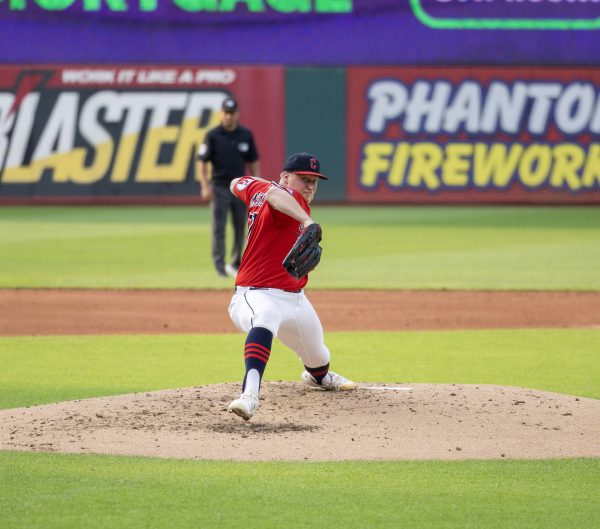
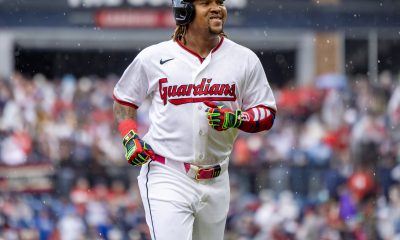
Photo by Charles Murray
Through July 28, the Guardians sat around the middle of the playoff picture at 54-53 or 55-53 depending on the latest game log update, but the run prevention has been doing almost all of the heavy lifting. Cleveland had scored only 420 to 426 runs in roughly 107 to 109 games, while allowing 438 runs. That negative run differential tells the story: this is a club surviving, not surging.
Team Stats Show a Bottom-Tier Offense
The Guardians’ overall batting line through Tuesday was the kind of profile that explains the frustration. StatMuse listed Cleveland at 107 games with a .230 batting average, .309 on-base percentage and .371 slugging percentage, with 104 home runs, 402 RBI, 381 walks, 895 strikeouts and 104 stolen bases. Fox Sports, using a 109-game table, had the Guardians at .230/.309/.368 with a .677 OPS, ranking 28th in MLB in batting average and near the bottom of the league in most major offensive categories.
The issue is not just a lack of power. Cleveland has speed, ranking near the top of the league in stolen bases, and it still draws walks at a useful rate. But the Guardians have not paired that with enough hits or slugging to create steady innings. Too often, runners are stranded, rallies die after one hard-hit ball, and the team asks its pitchers to make a 2-1 game hold up for nine innings.
The Individual Numbers Are a Mixed Bag
| Category | Guardians through 7/28/2026 | MLB rank/context |
| Batting average | .230 | 28th to 29th range |
| On-base percentage | .309 | Bottom third |
| Slugging percentage | .368 to .371 | Near the bottom of MLB |
| OPS | .677 | 28th range |
| Runs scored | 420 to 426 | Near bottom-third pace |
| Home runs | 104 to 105 | Below average |
| Stolen bases | 104 to 107 | Top-tier speed |
Chase DeLauter has been the best story in the lineup though he missed time with injury. Through July 28, he was hitting .282 with a .352 OBP, .447 slugging percentage, 11 home runs and 50 RBI. That is legitimate middle-of-the-order production.
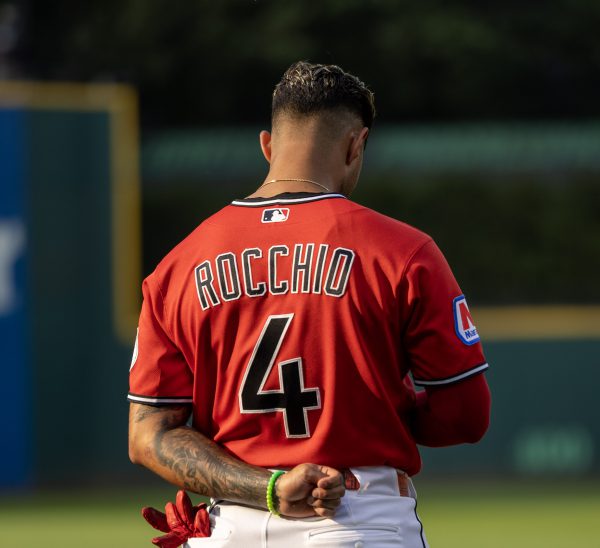
Photo by Charles Murray
Brayan Rocchio has also helped stabilize things, posting a .268 average, .328 OBP, nine home runs, 49 RBI and 15 steals. Steven Kwan, meanwhile, has started to wake up after a slow first half. His overall line sat at .248/.351/.308 with only one homer and 18 RBI, but his July surge is one of the few recent reasons for optimism.
Another possible factor is the way the lineup has been mixed and matched. Platooning can create better matchups on paper, but when players are constantly moving in and out of the order, it can also make it harder for hitters to settle into a rhythm. For a young lineup already searching for confidence, inconsistent playing time may be making the offensive drought worse by forcing too many players to produce without regular at-bats.
That is why Cleveland’s offense has felt nonexistent recently. The Guardians have a few useful pieces, but not enough length.
Vogt Keeps Selling the Bigger Picture
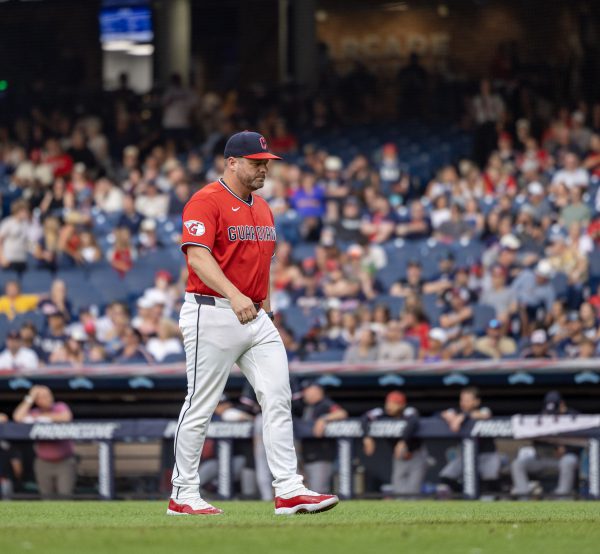
Photo by Charles Murray
While the numbers make Cleveland’s offensive issues difficult to ignore, manager Stephen Vogt has continued to frame the Guardians as a team that is playing strong overall baseball. After an early-season stretch against difficult opponents, Vogt said, “I know probably not many people had that record on paper for us. So, I think, you know, we’re just proving to ourselves again: We are good, and we know that.” It was the kind of quote that captured his broader approach: keep the clubhouse focused on belief, competitiveness, and daily progress rather than letting outside criticism define the season.
That optimism has shown up even when the offense has been inconsistent. In May, after the Guardians flashed power in a win over Cincinnati, Vogt pointed to the roster’s age curve as a reason to believe the bats could still grow. “I think we’re young. A lot of people don’t get into their power until 25 to 28, and we’re starting to get into those age ranges for a lot of our guys,” Vogt said. “As you get older, you learn when to take shots. You learn how to attack certain pitches.”
More recently, though, Vogt has not completely denied the problem. After Cleveland went 0-for-17 with runners in scoring position in a 3-1 extra-inning loss to Minnesota, he called it “a frustrating day for us offensively.” That admission matters because it undercuts the idea that the manager is blind to the issue. Still, his public tone has largely remained steady and positive, emphasizing that the Guardians are competing, pitching well, and giving themselves chances even when the lineup fails to finish innings.
That leaves Cleveland in an uncomfortable place. Vogt’s message may be exactly what a young team needs internally, but the standings and stat sheet are less forgiving. The Guardians can say they are playing good baseball in many phases, and they often are, but as long as the offense remains near the bottom of the league, every optimistic quote comes with an obvious question attached: when will the bats actually back it up?
The Bottom Line
Cleveland does not need to become the Dodgers overnight. It does not need a lineup full of stars. But it does need more than what it has shown recently. A team hitting around .230 with a sub-.680 OPS cannot expect a pitching staff to carry it through August, September and October on vibes and close-game execution alone.
The Guardians are still alive because their arms have given them a chance, and Vogt’s belief in the group is part of what keeps the clubhouse steady. But the offense has become the season’s defining problem. If the bats wake up, his confidence could look like leadership that helped a young team stay afloat. If they do not, Cleveland may look back on 2026 as the year its manager kept preaching belief while the lineup never gave him enough runs to justify it.






Recent Comments