
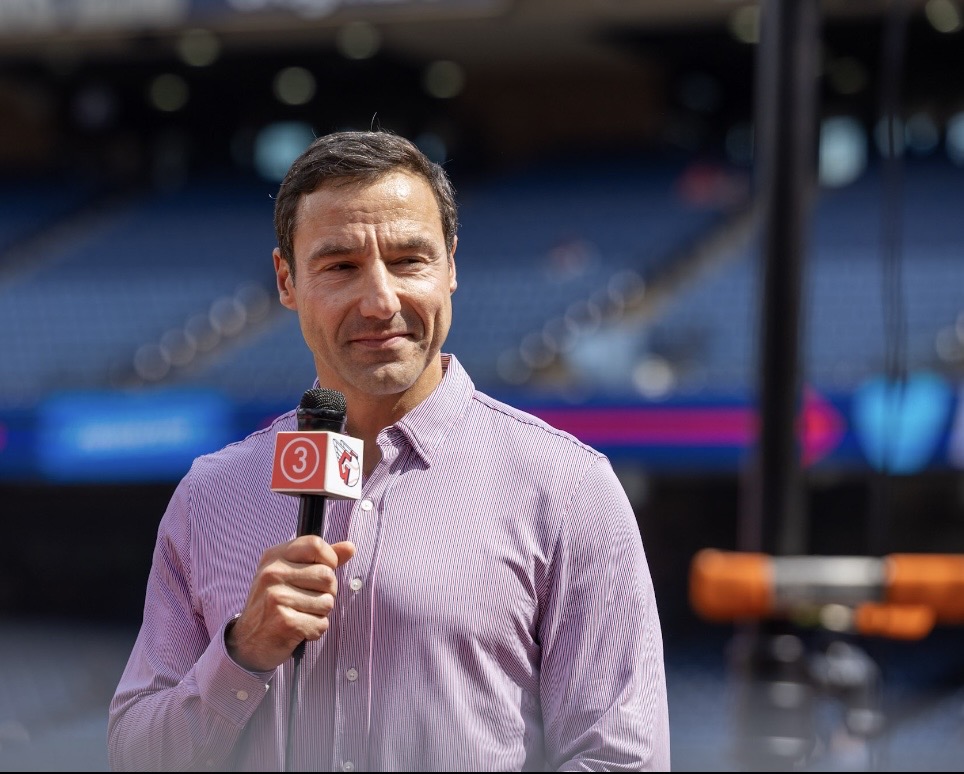
Cleveland used the final hours before the Aug. 3, 2026 MLB trade deadline to address power, rotation depth, and matchup flexibility.
CLEVELAND — The Cleveland Guardians did not treat the 2026 MLB trade deadline like a team content to merely hang around the playoff race. On Aug. 3, with the American League Central and Wild Card pictures still within reach, Cleveland made a series of aggressive moves that signaled a clear intent: the front office believes this roster is close enough to justify adding immediate help.
The headline additions were first baseman and designated hitter Nathaniel Lowe from the Cincinnati Reds, left-handed starter Foster Griffin from the Washington Nationals and right-handed outfielder Jo Adell from the Los Angeles Angels. Together, the moves gave Cleveland a more flexible lineup, a sturdier rotation, and a stronger mix of platoon options for manager Stephen Vogt down the stretch.
Deadline haul: three needs, three answers
The busiest portion of Cleveland’s deadline came in the final hours. The Guardians acquired Lowe from Cincinnati for pitching prospect Alejandro Rivera, adding a left-handed bat who entered the move batting .266 with 12 home runs, 17 doubles, 37 RBI and an .820 OPS in 83 games. For a team that had searched for steadier production at first base and designated hitter, Lowe immediately profiles as a veteran run producer who can lengthen the lineup.
Cleveland also landed Griffin, a 31-year-old left-hander enjoying a breakout season with Washington. Griffin was an All-Star in 2026 and had posted a 3.06 ERA and 1.075 WHIP across 22 starts, giving the Guardians another dependable starter capable of working deep into games. The price was significant: left-handers Will Dion and Josh Hartle, right-hander Kendeglys Virguez and outfielder Nick Mitchell went to the Nationals.
Earlier in the day, the Guardians added Adell from the Angels, surrendering catching prospect Jacob Cozart. Adell brings right-handed power and outfield depth, two traits Cleveland needed as it tried to balance a lineup that had leaned heavily on matchup management and timely pitching.
Why the moves fit Cleveland
Individually, none of the trades looked like a reckless blockbuster. Collectively, they formed one of the more purposeful deadline plans in the league. Lowe gives the Guardians a more proven left-handed bat for the middle of the order. Adell gives them a right-handed outfield option with power against left-handed pitching. Griffin gives them another veteran starter who can absorb innings and reduce pressure on the bullpen.
That last point may be especially important. Cleveland’s identity has long been built around pitching development, defense, and run prevention. Adding Griffin allows the Guardians to protect their relief corps in August and September when tight division races often become bullpen survival contests. If Griffin continues to throw strikes and keep the ball on the ground, he should benefit from Cleveland’s infield defense and pitching infrastructure.
The offensive additions are more about raising the floor than changing the franchise’s identity. Lowe and Adell give Vogt more ways to build a lineup based on the opposing starter. Against right-handers, Lowe can provide left-handed thump and on-base ability. Against left-handers, Adell can bring a power threat to the outfield mix. That may not make Cleveland an offensive juggernaut, but it should make the lineup less predictable and harder to navigate.
Cost and risk
The Guardians did pay real prospect capital. Giving up four players for Griffin, a veteran starter acquired for a pennant push, is not a small bet. Moving Cozart and Rivera also trims from the organization’s future depth. But Cleveland’s front office appeared to make a calculated decision: with the club hovering around the postseason picture and within striking distance in the division, marginal upgrades could be the difference between playing in October and watching from home.
There is still risk. Lowe must prove his rebound at the plate will carry into a new league environment. Adell’s swing-and-miss concerns remain part of his profile. Griffin’s breakout has to hold up under meaningful September innings. But deadline moves are rarely about certainty. They are about identifying weaknesses and giving a contender more ways to win.
Bottom line
By the time the deadline passed, the Guardians had made their message clear. They were not selling. They were not standing still. They were buying selectively, targeting players who fit specific roster gaps without completely abandoning the organization’s long-term discipline.
If Cleveland reaches the postseason, Aug. 3 may be remembered as the day the front office gave the roster the support it needed. If the Guardians fall short, the trades will still show that the club recognized the moment and acted. Either way, Cleveland’s deadline was not quiet, cautious, or passive. It was a contender’s deadline and now the Guardians have two months to prove it was the right one.



Recent Comments