
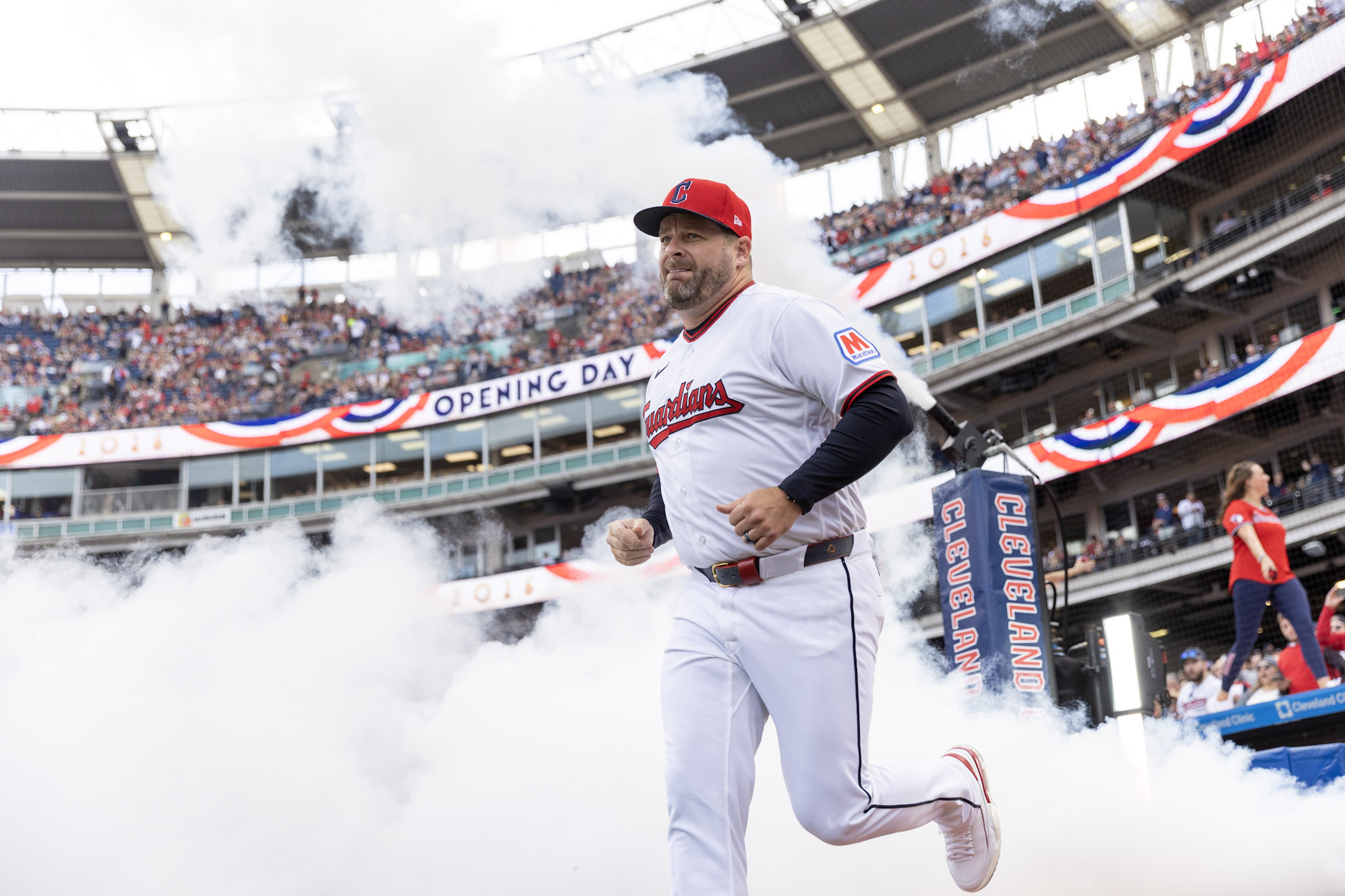
The Guardians’ season ended Monday night in a 7–3 loss to the Rays, the final score reflecting the cost of a pitching plan stretched past its breaking point.
Cleveland entered Game 6 one loss from elimination and without a conventional starter. Stephen Vogt chose Shawn Armstrong as the opener…using him for a third consecutive day while saving Gavin Williams for a Game 7 the Guardians first had to reach. The gamble grew from a depleted staff, but it also completed a series in which Cleveland treated innings as pieces to mix and match rather than entrust to established starters.
The critique should be direct: Vogt overmanaged the pitching staff. October rewards urgency, but Cleveland confused constant activity with control. It burned through relievers, turned every inning into another matchup decision and left no margin when Tampa Bay adjusted. The bold move was not another opener. It was trusting a rested starter to provide length.
The bind was partly self-created
The warning signs preceded Game 6. Cleveland carried 13 pitchers into the ALCS because the Division Series had taxed its staff. The extra arm was supposed to provide coverage and flexibility.
Instead, Game 4 became a seven-pitcher bullpen game. Foster Griffin, the Game 1 starter, threw 44 pitches over 3 2/3 relief innings. Parker Messick started Game 5, followed by Armstrong, Hunter Gaddis, Erik Sabrowski and Cade Smith. By Monday, Cleveland faced another bullpen game on a fourth consecutive day of baseball.
None of that made the choice easy. Messick had exceeded his previous major-league high in innings. Williams had thrown 201 innings between the regular season and postseason and would have worked on short rest. Bibee was fresh but had struggled. Those constraints do not absolve the manager; they define the decision he was hired to make.
Vogt’s core wager was that Cleveland could survive Game 6 with fragments and then unleash Williams on regular rest in Game 7. That logic protected the ideal tomorrow at the expense of the only game guaranteed to exist. Once Cleveland failed to reach Tuesday, the unused Game 7 advantage became the clearest symbol of the strategy’s failure.
Smith’s seventh inning exposed the cost
Vogt’s decision to summon Cade Smith in the seventh crystallized the problem. Smith had thrown 22 pitches over 1 1/3 innings in Game 5, one of eight postseason appearances before Monday. In my view, asking him for more outs reflected how few trustworthy alternatives Vogt’s plan had left.
Using Smith in an elimination game was not inherently wrong; every important arm should be available. The indictment is that Vogt’s earlier choices made another Smith appearance feel inevitable while Bibee, identified before Game 6 as an available length option, remained unused. Cleveland spent its best relievers as if each night existed in isolation, then asked the same arms to absorb the consequences.
The unanswered Bibee question
Why carry Tanner Bibee on a 13-man staff if Vogt did not trust him to record even one out in the first five ALCS games? Before Game 6, Bibee was identified as an available length option. He also had experience as both a regular-season and post-season starter. Using him carried risk. So did opening with Armstrong and handing the game to another relay of relievers.
The case for caution was legitimate. Bibee finished 7–15 with a 4.36 ERA, allowed a career-high 29 home runs and posted a 7.36 ERA over his final five regular-season starts. His only postseason appearance produced two walks and one strikeout against three batters. Those were reasons for a short leash…not necessarily, in my view, for erasing him from the series.
If Vogt considered Bibee unusable, the roster spot becomes part of the indictment. Cleveland dropped a versatile position player for an extra pitcher, then reached the emergency that justified the move while Bibee remained untouched. No public report reviewed here establishes that he was injured. Given his listed role as a length option, Vogt should have tried him for outs rather than continue cycling through the same bullpen core.
The offense shares the blame

Photo by Charles Murray
Pitching strategy was not the only reason Cleveland lost. The offense was inconsistent and repeatedly failed with runners in scoring position. In Game 6, the Guardians did not score until the sixth. They loaded the bases in the eighth but produced two runs on a walk and a hit batter…not the hit that might have changed the game.
Vogt’s pitching choices narrowed the margin for error; the lineup repeatedly failed to widen it. When a team cannot convert its best chances, every pitching decision carries more weight than it should.
The counterargument
Vogt’s defense is credible. Bibee had regressed, his lone October appearance was wild, and his September results were poor. Armstrong entered Game 6 with 7 2/3 scoreless postseason innings. Williams had excelled when rested and saving him for a possible Game 7 offered real value. A manager cannot manufacture a trustworthy starter because the calendar demands one.
But those facts justify caution, not paralysis. Bibee did not need to be treated as an ace; he needed a short leash and a chance to absorb outs. Vogt instead maximized bullpen exposure while saving Williams for a game Cleveland had not earned. That was not merely unconventional. It was a misallocation of the staff’s remaining resources.
The final accounting
The Guardians did not lose because of one pitching change, and Vogt had no perfect option hidden in the dugout. Tampa Bay executed. Freddy Peralta controlled the early innings. Cleveland again failed to do enough with runners in scoring position.
Still, a postseason series is a chain of choices. Vogt leaned on openers, bulk innings and aggressive bullpen sequencing while leaving Bibee unused. By Game 6, Cleveland was performing a high-wire act without a net. Smith’s seventh-inning appearance, after 22 pitches the day before, was not an isolated decision. To me, it was the predictable end of a strategy that repeatedly returned to the same trusted relievers while leaving a designated length option unused.







Recent Comments